





 1159
1159 5
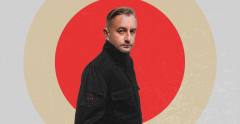
5Xavier Tytelman: the French analyst raising millions for Ukraine — and wearing Aviatsiya Halychyny
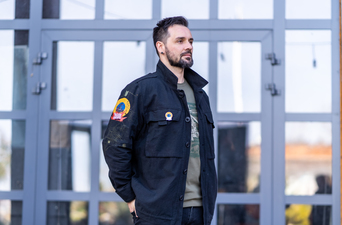
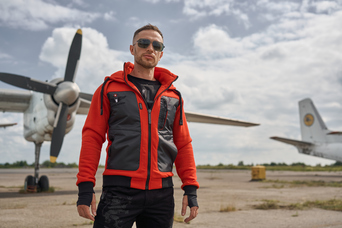
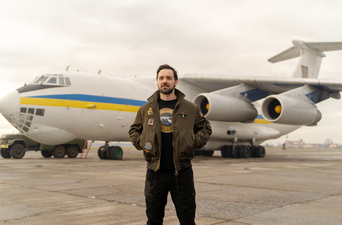
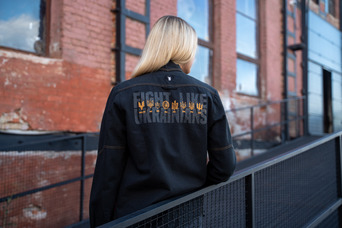
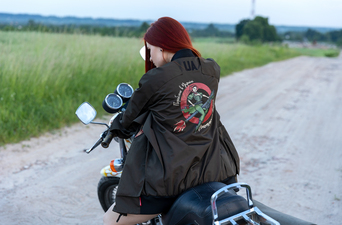
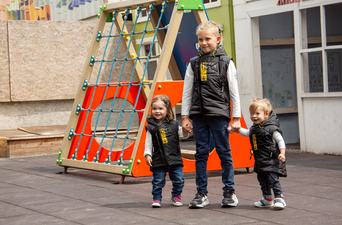
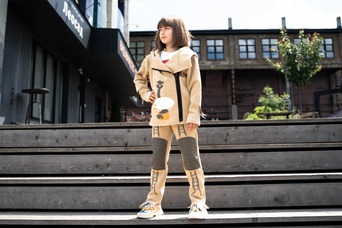
One day, Yurko Nazaruk, co-founder of Aviatsiya Halychyny, was taking a flight abroad when he noticed one of the passengers putting on a bomber jacket from our brand as they were getting off the plane. “One of ours. Maybe one of the Ukrainian pilots heading off for training,” Yurko thought at the time. But instead of guessing, he asked directly. That “one of ours” turned out to be a Frenchman — Xavier Tytelman. That was the first time we at Aviatsiya Halychyny heard about this remarkable man.
A few years passed. Then, suddenly, we started receiving quite a few orders from France. For us, shipping clothing to customers in different countries is nothing unusual. But when orders from one country start coming in one after another, that is something interesting. So, just as Yurko had once done, we asked directly: how had our French customers found out about us? They answered: through Xavier Tytelman’s blog.
It is a great honour for us to have such a friend and brand ambassador. So now, we have decided to introduce him to you as well.
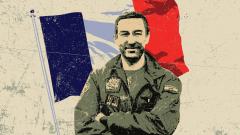
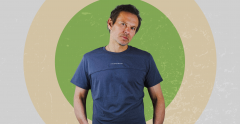
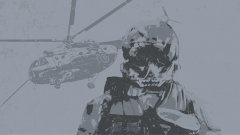
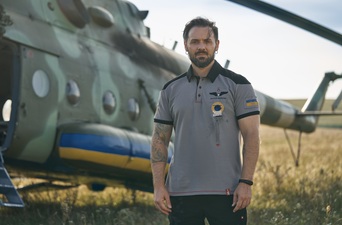
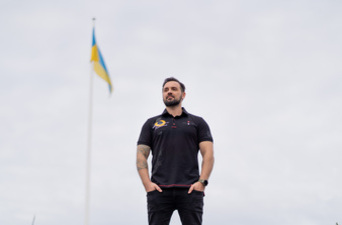
Xavier Tytelman is a French aviation and defence analyst, a former military aviator, the author of a YouTube channel with hundreds of thousands of subscribers, and one of the most consistent voices in support of Ukraine in France. His journey began with a childhood fascination with aviation, continued through service in French naval aviation, and later grew into public analysis, media work, and systematic support for Ukraine.
He does not speak about the war from the distance of a television studio. Xavier has visited Ukraine many times, travelled to areas near the front line, met with soldiers, volunteers, entrepreneurs and engineers, and is deeply impressed by the strength of spirit of Ukrainians. Through his community, he raises funds for vehicles, medical equipment, drones, generators and other critically important items, while also helping Ukrainian defence-tech companies build partnerships in Europe.
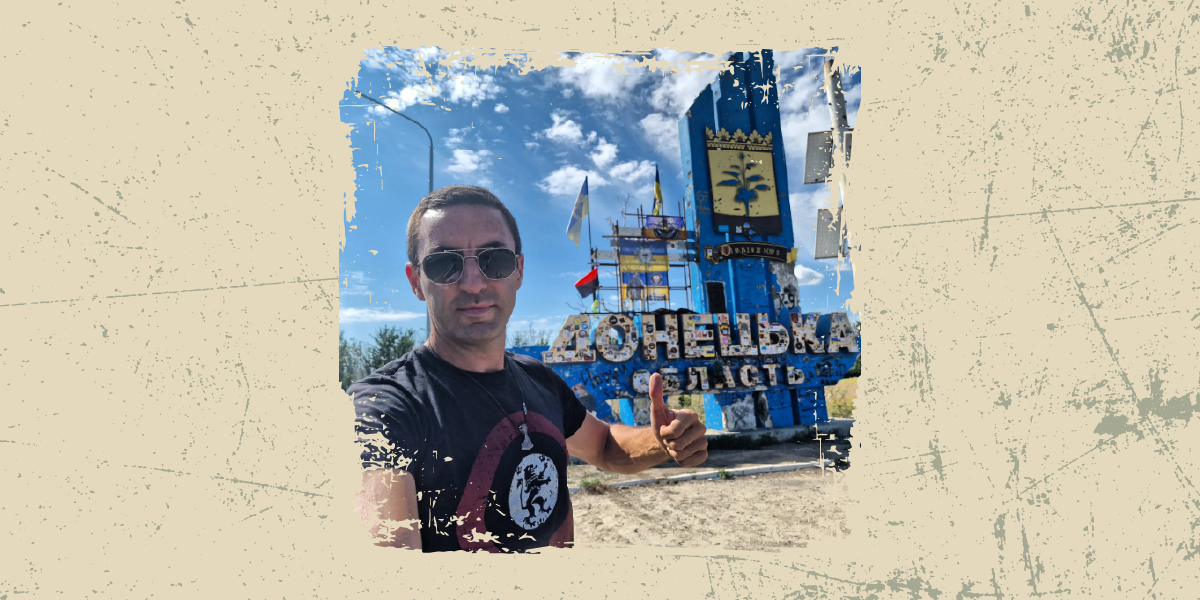
In this conversation, we talk with him about aviation, war, Ukrainian resilience, the future of military technologies, Europe’s perception of Ukraine — and why the struggle of Ukrainians has already changed the world.
What follows is Xavier in his own words, so that you can get to know him for yourselves.
To begin, could you tell us a little about yourself? How did you get into aviation, what do you do today, and how did you become one of France’s most recognized aviation and defense analysts?
I’ve always been passionate about aviation. As a child, my school was called after the “Commander Mouchotte,” a real hero, an aviator who fought the nazis… What a model! I was going to airshows with my parents, Reading whatever was available, and I was dreaming of working in military aviation to pursue my passion, while serving my country at the same time.
After a decade in French Naval Aviation as a navigator and radar operator, and later as a mission planner for Rafale fighter aircraft, I began working in innovation projects supporting the aerospace and defense sectors.
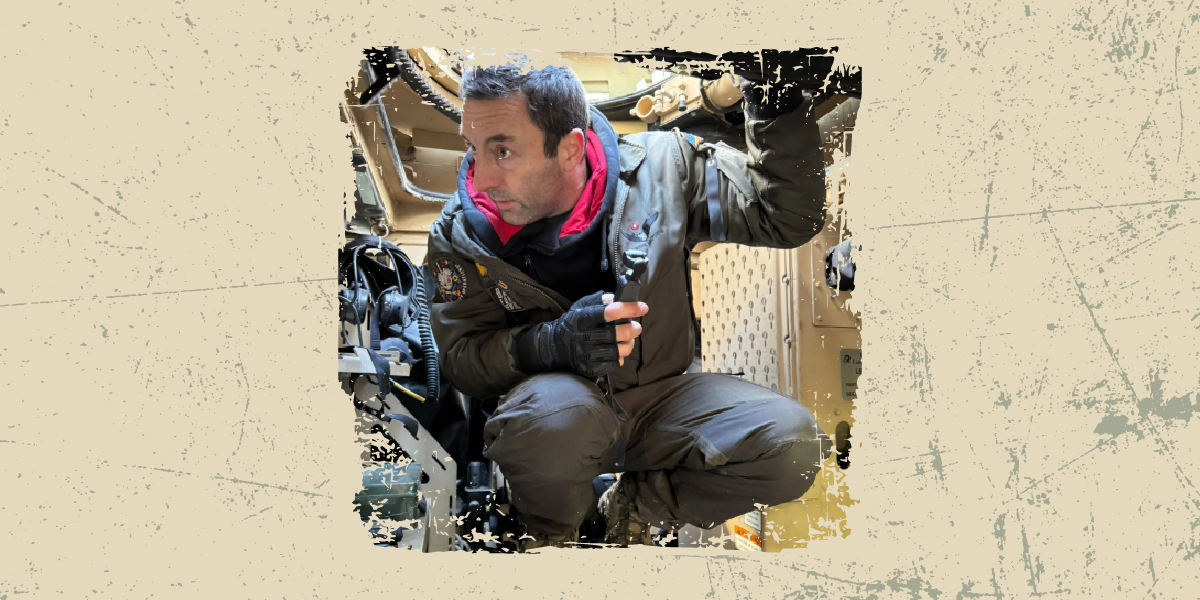
I created a dedicated blog, and the media gradually started reaching out to me for interviews. I then launched my YouTube channel, and today I have built a community of more than 800,000 followers with whom I discuss aviation, defense, and also share my analysis on the war in Ukraine. My YouTube channel is now translated into seven languages, including Russian (I apologize that Ukrainian was not available in the AI translation system!), while I continue to work part-time on defense innovation projects, specifically in Ukraine.
Since the start of Russia’s full-scale invasion, you have become one of Ukraine’s most active supporters in France. When and why did you decide to get involved in supporting Ukraine?
I began defending Ukraine in the media as early as 2014. At the time, I was frequently asked to explain aviation accidents, which led me to analyze the case of MH17, the civilian airliner shot down by Russian-backed forces over the Donbas in July 2014.
Russia promoted an implausible narrative designed to deflect responsibility, but the evidence simply did not support it. In my analyses and media appearances, I systematically debunked these claims and accused Russia. My articles were even shared by Ukrainian embassies across French-speaking countries, which eventually led Russian to target my blog to attend to crash it… But whenever I am attacked, I respond by raising the stakes (french style, baby!). From that time, I consistently used Russian disinformation campaigns as case studies in the conferences I was giving on propaganda and information warfare.
On my YouTube channel, I was also producing analyses of military operations, such as the American air campaign in Afghanistan. When Russia began preparing its invasion of Ukraine in 2021, I published several analyses of the incoming conflict, which, in my view, was no longer in doubt. I continued sounding the alarm until February 2022, and when the war finally began, I was one of the few analysts who already had a deep understanding of Ukraine: its military’s capacity for innovation, its armed forces’ adaptability, and its people’s determination to resist. Thanks to my close connections with people on the ground, my perspective differed significantly from that of many television commentators. While most predicted a rapid Ukrainian defeat, I argued the opposite: the Armed Forces of Ukraine would resist effectively, the invading forces would underperform, and Russian military equipment was far less capable than Russian propaganda claimed.
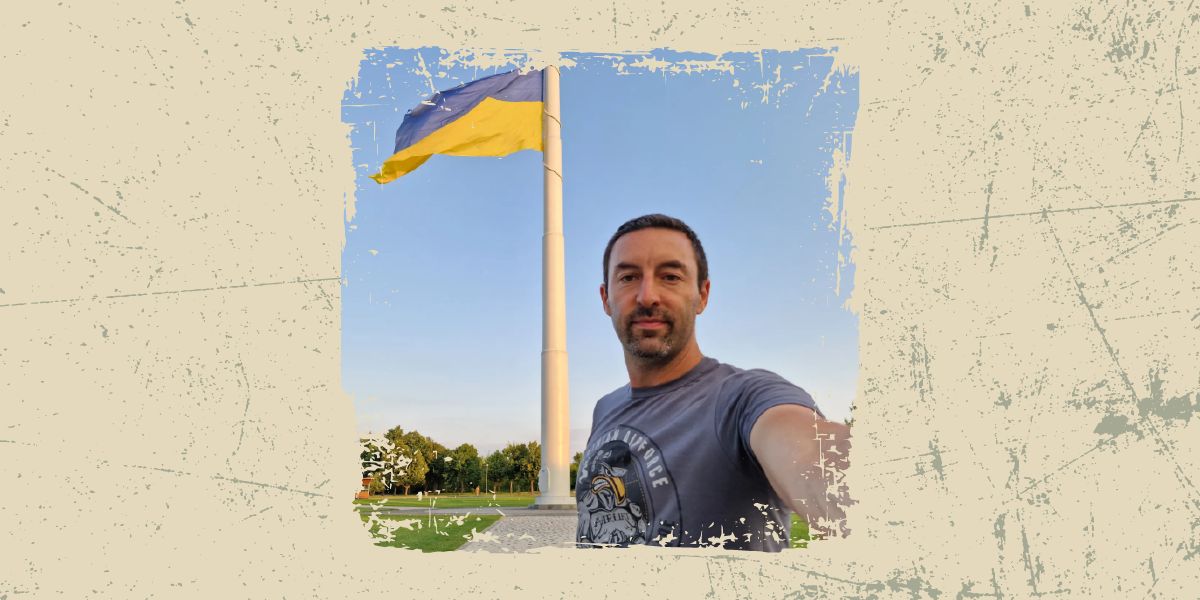
What are you doing today to help Ukrainians?
You know, a YouTube channel can generate a great deal of revenue, but from the very beginning I decided that I did not want to earn a single cent from the suffering of Ukrainians dying in this war.
In my very first video about the Russian invasion, I announced that all profits from the video would be donated to humanitarian efforts in Ukraine, and I kept doing so. However, during the major Ukrainian counteroffensives of October 2022, the NGO I was working with urgently requested items that I simply could not fund on my own, particularly 4×4 vehicles. For the first time, instead of relying on my own money, I turned to my community for support. We raised more than €70,000 in a single weekend. It was incredibly moving and a week later, the cars were supplying civilians in the liberated areas.
Since then, we have consistently managed to raise more than one million euros each year. This has enabled us to donate dozens of vehicles and ambulances, 13 Stabnet medical containers, hundreds of drones, electric generators, solar panel farms, protective equipment such as jammers, drone detectors, thermal blankets and many other essential supplies.
At the same time, I began traveling directly to Ukraine. Initially, my goal was to support Ukrainian industry, by donating 3D printers and offering consulting services to help scale production thanks to Industry 4.0 methods. Today, however, I am the one learning from Ukrainian efficiency. I continue to contribute to this industrial effort, for example by serving as a mentor during hackathons organized as part of Kyiv Defense Tech Week, by helping Ukrainian companies to build partnerships across Europe, and even assisting them in securing funding to accelerate innovation.
Meanwhile, I have returned to Ukraine dozens of times, including visits to the front lines. These missions give me the chance to witness the reality of the battlefield, produce reports that raise public awareness and continue to generate donations. It has become a virtuous circle.
I also use my visibility and connections in France to push politicians to increase our support for Ukraine. One good example was the transfer of the French Mirage 2000 fighter jets to Ukraine, I will never know if our efforts counted for 1 or 50% of the positive outcome, but I met several politicians to this matter, we launched petitions, my community was supporting the idea wherever it was needed.
And now we are fighting for the Skyshield initiative, to directly involve Europeans air forces in the defense or ukrainian sky.
You visit Ukraine frequently and have met many Ukrainians — soldiers, volunteers, entrepreneurs, and civilians. How would you describe our nation? What has impressed you the most about Ukrainians?
Ukraine is, above all, a country of resilience, creativity, and determination.
What has impressed me the most throughout this war is not any single military achievement, but the extraordinary ability of Ukrainian society to adapt and innovate under the most difficult circumstances imaginable. Ukrainians have demonstrated a remarkable capacity to solve problems quickly, whether on the battlefield, in industry, in logistics, or in civil society. When faced with a challenge, their instinct is not to wait for someone else to solve it—they organize, experiment, and find solutions themselves.
I have also been deeply impressed by the relationship between Ukrainian society and its armed forces. In many countries, there is a clear separation between civilians and the military. In Ukraine, the war effort has become a truly national endeavor. Volunteers, engineers, entrepreneurs, teachers, students, and soldiers are all contributing in their own way. This creates an incredible level of energy and adaptability that is difficult to replicate.
Another striking quality is humility. Many of the most capable people I have met in Ukraine—soldiers, engineers, startup founders, government officials—rarely boast about their achievements. They are focused on the next problem that needs to be solved rather than on celebrating their successes. Yet the scale of what they have accomplished since 2022 is extraordinary.
Finally, I am constantly inspired by their optimism. After spending time near the front lines, you might expect people to be discouraged. Instead, I often encounter humor, determination, and a refusal to surrender hope. Ukrainians understand the gravity of the situation better than anyone, yet they continue to build companies, develop technologies, organize cultural events, and plan for the future.
If I had to summarize Ukraine in a few words, I would say that it is a country that has transformed adversity into innovation and resilience into strength. I’m proud to say that i have good Friends here.
During your trips to Ukraine, you have witnessed many stories and met many remarkable people. Is there a particular encounter or moment that left the strongest impression on you and had the greatest impact on you personally?
I could give a hundred different examples: from the laughter I shared in the trenches to the retirement homes where residents were weaving electrical cables for drones; from soldiers who recount acts of extraordinary bravery with the utmost simplicity, to those responsible for targeting operations inside Russian territory who use of techniques that seem to come straight out of a movie; and also foreign volunteers – including many French volunteers whom I support – whom I consider heroes, much like the volunteers who went to fight in Spain in 1936 to stop fascism.
But if I had to mention just one person, I would choose Irina Terekh, the Chief Technical Engineer and now CEO of Firepoint, whom I had the privilege of interviewing for my YouTube channel. She embodies the spirit of the country. Her intelligence and determination are capable of moving mountains.
Ukraine possesses an entire generation of leaders dedicated to a cause greater than themselves: finally bringing an end to four centuries of Russian imperialism. This independence war is a collective effort that can only be carried forward by people of exceptional character and commitment. She is one of them.
You often speak about aviation, military technologies, and modern warfare. What lessons from Ukrainian aviation and the Ukrainian Armed Forces are being studied by the rest of the world today? Which of these lessons do you believe will shape future military doctrines?
Rapid and affordable efficacy! In each of the NATO exercises where a few Ukrainians take part, they beat all other countries.
They use each piece of equipment they received in the best way it can be – better than what we do with those systems! -, create new systems, improve everything thanks to drone and info-valorisation of the battlefield, and that finally allows ukrainians to develop new tactics and a whole new doctrine… The feedback loop is incredibly fast and efficient in Ukraine, and I sometimes feel that other countries are not catching up, you are running faster and faster away from our capabilities, because you allow the whole world to support you through this open world, no traditional way of developing weapons can catch you up. In addition, new weapons are smarter and massively rely on artificial intelligence, which means you need data to feed your AI-models. Only two countries can now feed their models at full scale: Ukraine and Russia. Hopefully, they didn’t understand the value of those data as early as you did.
So, to summarize my point: to stop the Russians you need to launch 10.000 drones per day and you need to be able to support an enemy who launchs 10.000 a day at you, and none of NATO armies can achieve that performance.
In your video you mentioned Aviatsiya Halychyny, and shortly afterward we started receiving orders from France. How did you first discover our brand, and what made you decide to share it with your audience?
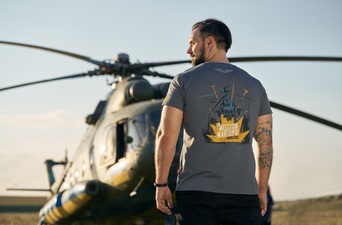
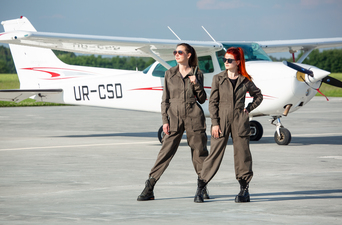
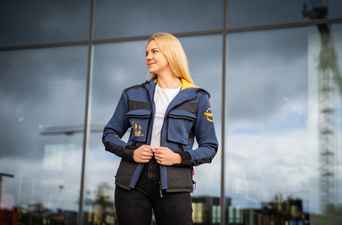
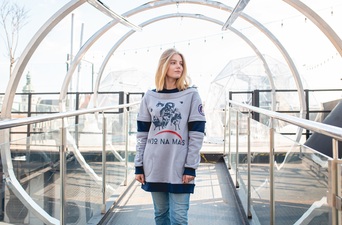
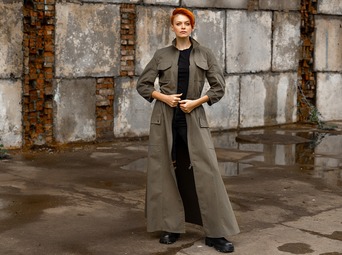
I discovered Aviatsiya Halychyny during my very first trip in Ukraine, it was the shop in front of the Golden Gate in Kyiv. It’s stylish, it represents both my passion for aviation and my engagement towards Ukraine. And of course, the quality is good, part of your revenue goes back to supporting the frontline and your factories are in Ukraine, it helped refugees to find jobs.
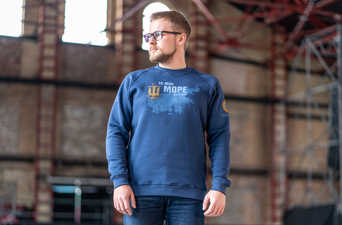
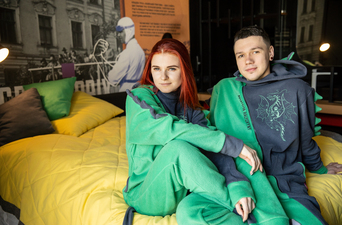
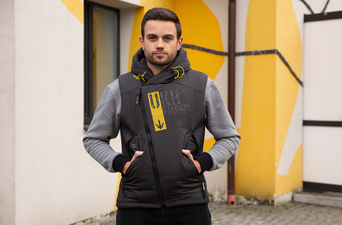
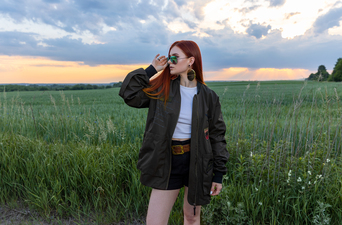
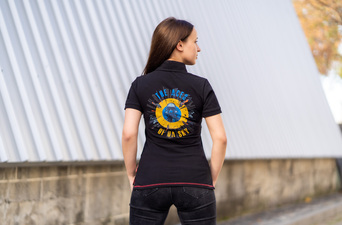
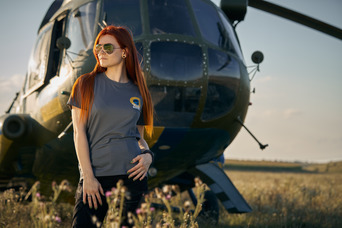
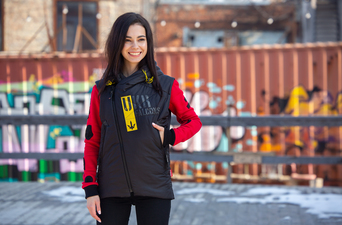
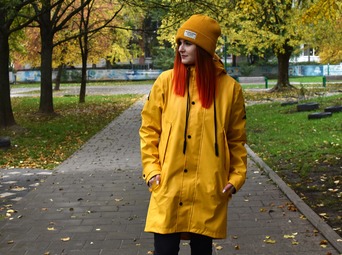
I directly loved the brand, both for the design and the ideology it was bearing, and you can see Aviatsiya Halychyny in lots of my videos or Instagram. I wear your products as often as I can. People were often asking for the origin of those products in the comments, so I was directly answering to those comments. After a while, I decided to directly support your brand at the end of one of my videos. I’m happy it worked.
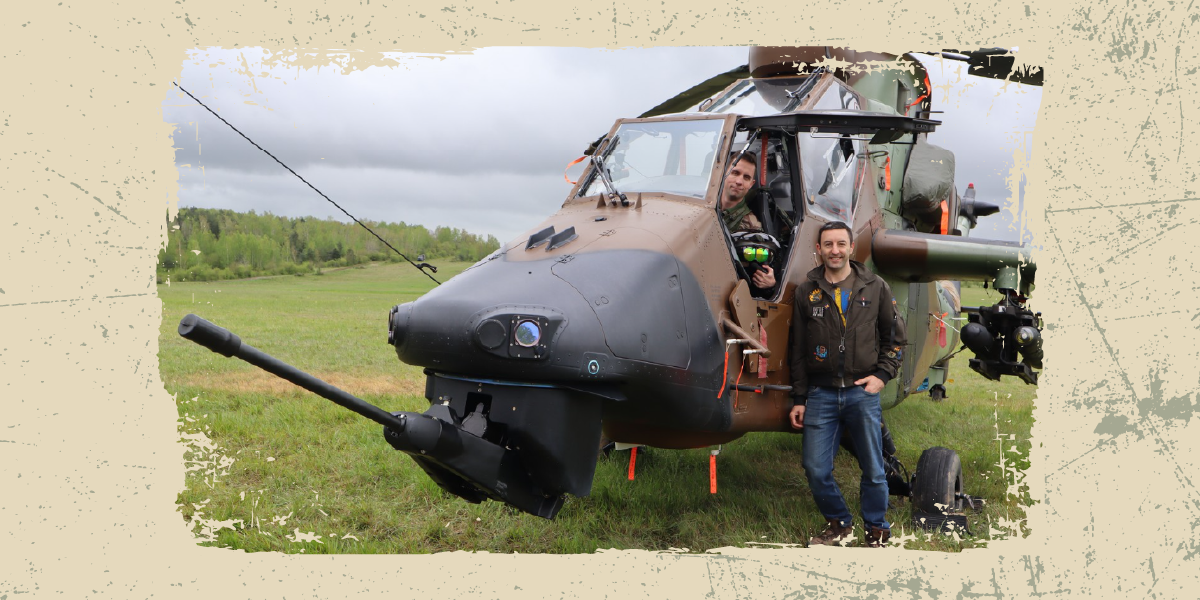
You communicate with a large French and European audience. In your opinion, what do people in France and across Europe still perhaps not fully understand about Ukraine, Ukrainians, and this war?
Most Europeans still believe the War in Ukraine is just a war in Ukraine, and even if the majority of people support Ukraine, they are not ready to pay the price of a fair support to Ukraine, even if it was just economical.
In addition, very few people understand the real threat that europeans face with Russia. In the beginning of the War, member of the State’s Duma from Putin’s political party proposed a bill to cancel the recognition of the independance of both Ukraine and the Baltic States.
If the invasion of Ukraine had gone “as planed” for Russians, they would have attacked those countries, and high-level russian figures as Patrushev still confirm this openly. Even the most selfish people should understand that supporting Ukraine is not just the right thing to do, it’s also in our own highest interest.
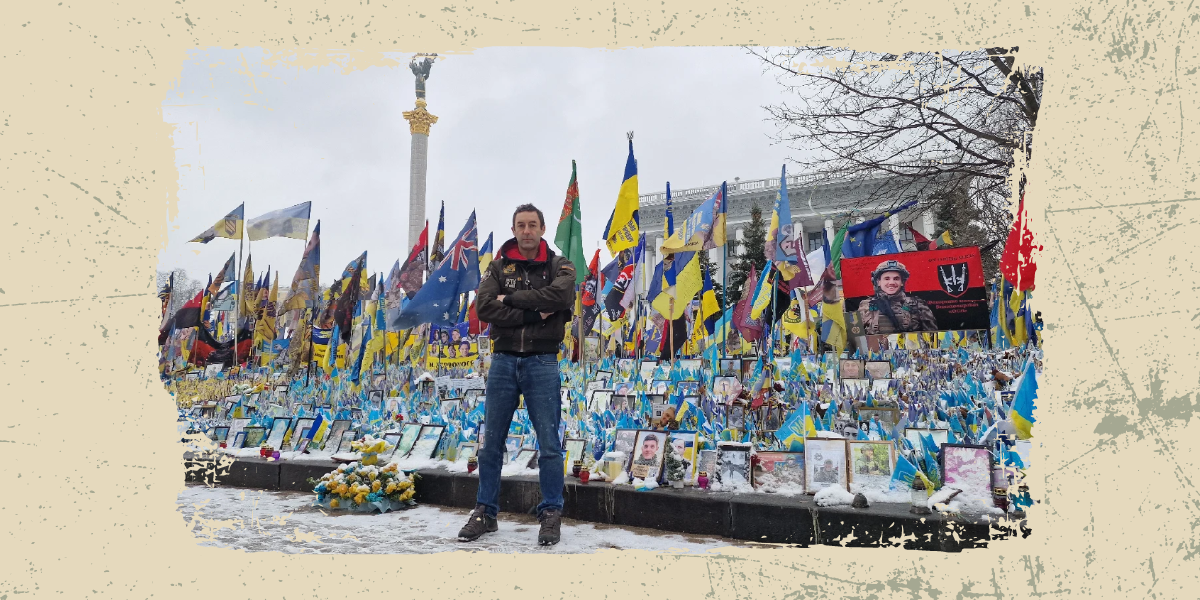
If Ukraine had fallen, european countries would already be in an open war against Russia. We were not ready 4 years ago, and despite the delay that Ukraine offered us at the highest price, with its blood, we still are not, and everybody is still not convinced of the importance of our support to Ukraine.
There is also something I really like in Ukraine: its people. You are fu***ng smart, modern, open-minded, and proud of your country and its history, that offers a real unity in the society. Sometimes, I believe that Europeans are afraid to defend their very own values, we lost this feeling that we are a community and that we share the same future.
Ukrainians have now been living through more than four years of full-scale war. If you could address them through our blog, what message would you like to share today?
First, I want to thank you for proving the world wrong, for resisting when so many believed resistance was impossible, for showing that courage, the taste for freedom and dignity not as abstract concepts, but as values worth fighting for. Unfortunately, we needed this war so that Ukraine is seen as it should always have been seen. I have had the privilege of meeting soldiers, engineers, entrepreneurs, volunteers, doctors, teachers, and ordinary citizens, your resilience and determination are above all that was seen before. Many people outside Ukraine see the war through statistics, maps, or headlines, but I personally saw the human side of this struggle. I know that fatigue is real and that many of you have paid an unbearable price. Nothing I can say will lessen that burden, but millions of ordinary people around the world continue to admire what you have achieved and want to take part in the defense of Ukraine. We are not as present as we should, but we are there at your side.
To make it simple: thank you, stay strong, your example has already changed the world, and one day you will be repaid for the debt we owe you.
How has your personal perception of Ukraine changed over these years? And how do you envision Ukraine after victory?
Ukraine changed because it had to adapt in a good way. Now, Ukraine has an amazing momentum thanks to its fighters and the development of technologies, you dominate the frontline thanks to the drones ecosystem, some of the most dangerous missions can now be achieved by ground robots, your long range strikes are getting more and more effective, which will lead to a collapse of the russian capacity to fuel their war. You are offering the world an end to russian imperialism, the same way France or Great Britain had to lost their colonies. And by the way, Frenchs and Ukrainians now share something in common: we both burnt Moscow 😉
After victory, you will be considered as a defense-tech giant like Israel or South Korea before, and an amazing number of your defense companies will win billion-dollar worth of contracts abroad. In the same time, the technologies you developed will reach the world for dual-use technologies, for example the “baba yaga will” deliver pizzas, ground robots will be used for civilian logistics in remote areas, your communication devices will help restoring network after natural disasters, you will replace china for electronics.
At the end of the Cold War, Ukraine was richer than Poland, more industrial than Poland, the Ukrainians were more educated than Poland. You just didn’t have the chance to follow the right direction. This war is an independence war, it will be the opportunity to catch up those delays, get closer to your true historical family in Europe, and follow the paths toward a peaceful economic development, where human values and well being would be central. You have the right leaders to achieve all that.
In Xavier Tytelman’s words, Ukraine emerges not only as a country resisting aggression, but as a nation redefining the very nature of modern warfare, innovation, and national unity. He sees Ukrainians not as victims of circumstance, but as people capable of turning the most difficult challenges into solutions, strength, and future opportunities.
And perhaps the most important message of this conversation is a reminder that supporting Ukraine is not an act of sympathy. It is a shared responsibility and a shared choice about the future. Ukrainians have already shown the world that freedom, dignity, and determination can change the course of history. Now it is up to the world to decide whether it is ready to stand with Ukraine in the fight for justice — and to finally help push the evil empire toward its complete self-destruction.


Ми збираємо файли cookie для кращого діалогу з вами Детальніше.
Використовуючи цей сайт, ви погоджуєтесь з цим
Дякуємо
Підписка на статті
Акції, знижки, пропозиції